





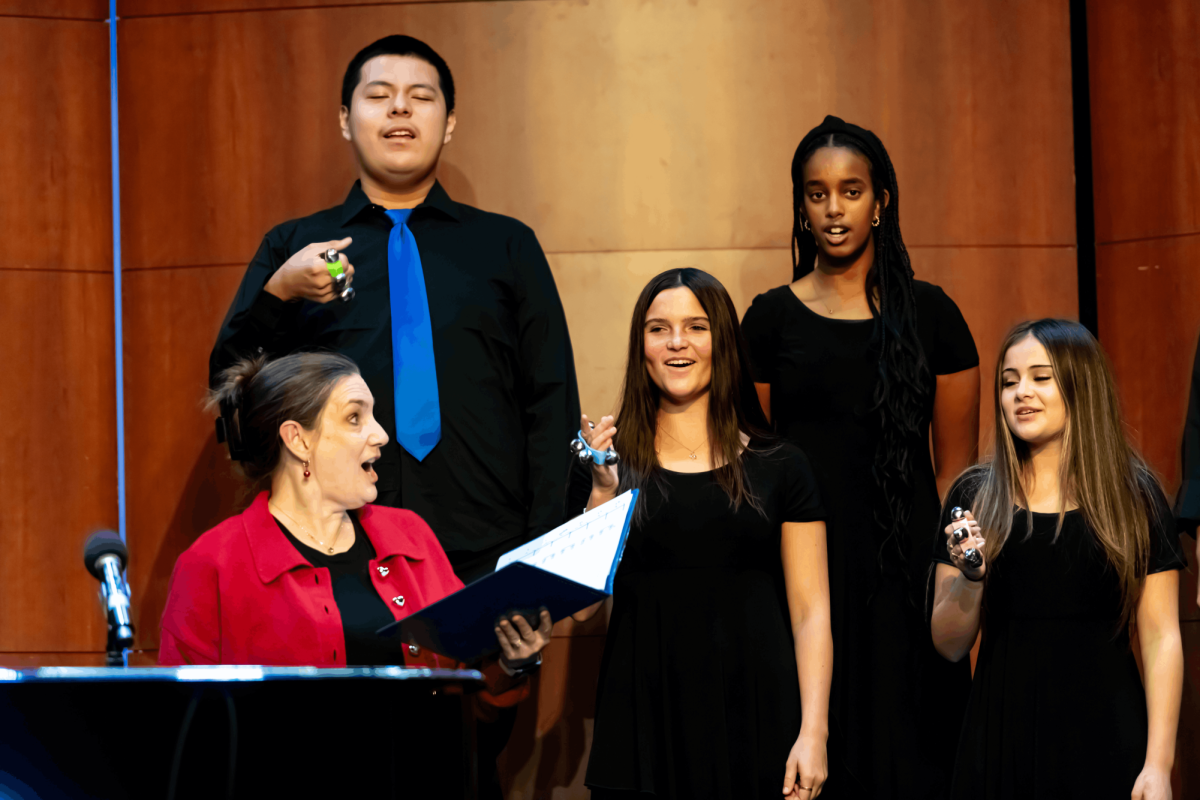









Before the first note is even sung, the choir room is already alive. Conversations overlap, music sheets rustle and students ease themselves into a space that feels noticeably different from the rest of the school day.
That environment is the result of years of intentional teaching by WHS’s choir director Amy Rolniak. Through consistency, encouragement and a heavy focus on belonging, Rolniak has shaped a program that prioritizes both personal connection and musical growth.
“My teaching philosophy when it comes to choir is I believe choir is for everyone,” said Rolniak. “Anyone can be successful in choir. Anyone can learn how to sing. Anyone can see that singing with other people is one of life’s greatest joys.”
This mindset impacts everything from daily in–class rehearsals to how students interact with one another. The choir is structured to ensure singers feel supported rather than compared, allowing individuals to develop at their own pace while still contributing to a collective sound.
“She is one of the kindest, most compassionate people I have ever met,” said Treble Chorale singer Kaylin Kelly ‘29. “I’ve truly never had a teacher like her, and I’m so thankful to have her.”
That supportive atmosphere is especially notable during rehearsals, where students are encouraged to ask questions and improve without fear of judgment. Rolniak’s presence is attentive and active instead of distant.
“She’s very sweet,” said Vocal Ensemble singer Andy Soto ‘29. “If someone needs help, she comes around.”
In addition to individual support, Rolniak emphasizes accountability within the group. Students are taught that effort and consistency affect not only personal growth but the choir as a whole.
“She’s taught me that one person does mean a lot to a team,” Kelly said. “Every person does matter.”
While the culture of the choir has remained consistent throughout the years, Rolniak’s experience has shaped how she approaches her work. She has refined her teaching by learning what most effectively supports students’ success.
“I think that my basic approach to teaching hasn’t changed much but also just enough,” Rolniak said. “Ive gotten more efficient at it. I’ve gotten to see what works and doesn’t work.”
Those adjustments have become most visible during performances, but even beyond the stage. Students describe the choir room as a constant in their schedule. functions as a reliable space where expectations are clear, and encouragement is consistent.
“I would say it’s warm and very welcoming,” said Treble Chorale singer Alexa Garcia ‘28. “I truly just love the fact that I know that I can always have this class as my home base.”